Heaven's River - Dennis E. Taylor

Vier Jahre sind vergangen, seit ich das letzte Buch der Bobiverse-Reihe gelesen habe. Und heute weiß ich auch, warum ich so lange gezögert habe.

Vier Jahre sind vergangen, seit ich das letzte Buch der Bobiverse-Reihe gelesen habe. Und heute weiß ich auch, warum ich so lange gezögert habe.

Ich habe dieses Buch gerade erst zugeklappt und bin mir noch nicht sicher, ob das Gefühl Bestand haben wird – aber im Moment glaube ich, dass dieses Buch, zusammen mit seinem Vorgänger, ein 6-Sterne-Buch für mich ist. Warum?

Ich war gerade im Urlaub und brauchte noch eine einfache Lektüre für einen 5-Stunden-Flug. Und wenn es um einfache und unterhaltsame Bücher geht, kann man mit einem Scalzi nichts falsch machen.

Es ist schon fast drei Jahre her, dass ich Best Served Cold – den zweiten in sich abgeschlossenen Ableger des First Law Universums – gelesen habe. Was seltsam ist, denn eigentlich mochte ich die ganze Reihe ganz gerne.
In diesem Teil geht es um eine Schlacht, Rivalitäten, Depressionen und weder Gut noch Böse.

Ich mag John Scalzi [1]. Old Man's War hat mich damals richtig gefesselt, und die Interdependency–Serie war eine kurzweilige Space-Opera. Und dann war da noch Red Shirts, eine schöne, an Star Trek angelegte Satire auf gängige Science-Fiction-Tropes und Klischees [2].
Und jetzt versucht er es mit Starter Villain noch einmal – diesmal mit einer Satire auf Super-Schurken, geheime Basen und die ganze Klischee-Kiste, inklusive Katze, Space-Laser und einem Vulkan-Versteck.

Der volle Titel von Kurt Vonneguts berühmtem Roman ist bereits ein Statement: “Slaughterhouse-Five or The Children’s Crusade: A Duty-dance with Death”. Das Buch beginnt ungewöhnlich – das erste Kapitel ist ein Prolog, in dem der Autor selbst als Figur auftritt und uns auf eine Reise vorbereitet, die alles andere als linear verläuft.

Lest mal diesen Klappentext:
On the world called Hyperion, beyond the law of the Hegemony of Man, there waits the creature called the Shrike. There are those who worship it. There are those who fear it. And there are those who have vowed to destroy it. In the Valley of the Time Tombs, where huge, brooding structures move backward through time, the Shrike waits for them all. On the eve of Armageddon with the entire galaxy at war, seven pilgrims set forth on a final voyage to Hyperion seeking the answers to the unsolved riddles of their lives. Each carries a desperate hope—and a terrible secret. And one may hold the fate of humanity in his hands.
Alles klar?
Manchmal steht ein Buch jahrelang im Regal, weil der Klappentext mehr Fragen aufwirft als Lust aufs Lesen macht. Hyperion war bei mir so ein Fall: Ein mysteriöses Wesen namens Shrike, Pilgerreisen, Zeitgräber, galaktischer Krieg – klingt erstmal nach klassischer Space Opera, aber irgendwie auch nach einem Buch, das sich nicht so recht greifen lässt.

In dem Versuch, ihre Schwester vor einem brutalen Prinzen zu schützen, reist eine Prinzessin durch die Welt und trifft eine Grabhexe mit einem dämonischen Huhn, eine magische Taufpatin [1], die Babys segnen oder verfluchen kann, einen Krieger, der an seine Ehre gebunden ist, sowie einen selbstgemachten Hund aus Knochen.

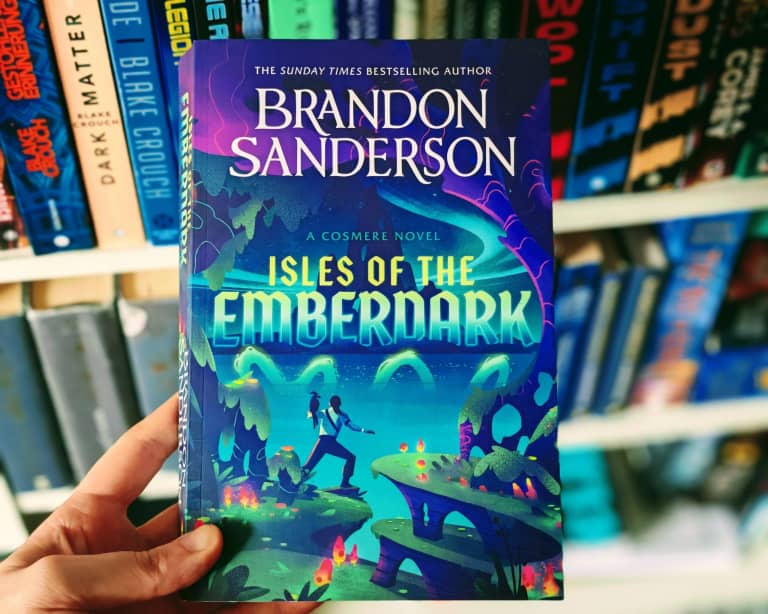
Vor einigen Jahren habe ich mir vorgenommen, keine Bücherreihen oder Bücher eines einzelnen Autors direkt hintereinander zu lesen. Diese Regel habe ich zwar nie ganz konsequent eingehalten, aber selten so sehr gebrochen wie beim Cosmere von Sanderson. Auch die zweite Ära der Mistborn-Serie - auch bekannt als die Wax and Wayne Ära - bildet da keine Ausnahme.
Note: A German translation can be found below
As a software developer, I keep running into the same problem: the next day, I often have no idea what I actually did just that morning. Maybe it’s just me – but I doubt I’m the only one who, when standup or timesheet time rolls around, suddenly has to play detective. Tickets, commits, calendars – everything gets combed through just to answer that one question: What did I actually do? All I want is to write code, not write reports.

The funny thing is: I’m already tracking my time – with GIT! So I built myself a little tool: whathaveidone. It shows you all your Git commits for any time period right in your terminal, whether for a single project or all at once. Written in Rust and powered by Ratatui for a slick TUI – fully keyboard-controlled and packed with options.
AI summary? Totally optional!
With a single keystroke, you get an AI summary of your commits (Google Gemini). But you don’t have to – if you prefer reading yourself, that’s cool too.
Quick Standup:
whathaveidone today --lang english
Shows all today’s commits and a snappy summary (choose English or German).
Weekly review for multiple projects:
You don't want to write whathaveidone all the time? You can just write whid.
whid week --model gemini-2.0-pro
Switch the AI model for even better summaries.
Custom prompt for personalized reports:
whathaveidone --prompt myprompt.txt --from 2024-07-01 --to 2024-07-07
Use your own prompt templates and pick any date range.
Detailed view:
Hit d in the commit view for a full "git log"-style overview.
For more examples, check the whathaveidone github repository
Feedback? Suggestions? Ideas?
Hit me up on Mastodon, Bluesky, GitHub
If you like the project, I’d also be super happy about a star on GitHub ⭐️
More info & installation: