REPLACED begins like a promise. A typical 2D side-scrolling platformer with pixel art. We are in the middle of a car chase; a vehicle stops in the background. It fires at us. A harpoon projectile narrowly misses us and hits the ground in the foreground. The camera pulls out and down, leaving its rigid 2D perspective and showing us the projectile in the ground. The background blurs, sunlight reflects in puddles, the music thunders. It is a moment—the moment where even the last player realizes that this is not a typical 2D experience. Wow.
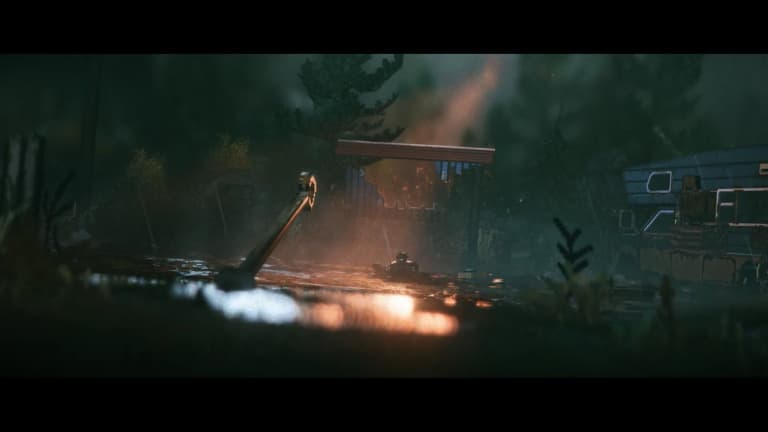
It is one of the best moments a game can offer in 2026. The pixel-art world of Sad Cat Studios looks as if someone took the engine of Flashback and threw it into a time machine. Retro aesthetics meet modern lighting: Cyberpunk-80s with neon and smog. The cinematic 2.5D presentation turns a side-scroller into something that feels like a movie. No, it is not the first game to merge dimensions—the grandiose Inside comes to mind—but so far, no one has staged it as well as REPLACED.
And then ... then you start playing.
Dazzling! Just not in the gameplay.
The graphics stand in the way of REPLACED. Not metaphorically—literally. Level objects and paths vanish into the background. Abysses look like paths; paths look like abysses. You turn the brightness up to identify objects you need to interact with. Then you turn it back down because it simply looks better. And then you die anyway because you couldn't see that the point where you needed to stand was five pixels further to the right.
It’s frustrating. No matter how good something looks—if you can’t read it, it’s broken.
Pixel-perfect and terrible
Platforming sections in REPLACED require pixel-perfect precision. In some places, the jump must be timed exactly, yet the game fails to tell you that you should have pressed "jump." Input lag does the rest. You fall over the same steel beam for the fifth time, even though you know it’s there, even though you press the button in time—just not "in time" enough for the game to consider it the right moment.
Don’t get me wrong: I just finished a long playthrough of Red Dead Redemption 2, a game that celebrates its sluggishness. The main character doesn't just stop running; an older cowboy in his 40s slowly comes to a halt. It fits, it creates atmosphere... even if it's a bit much sometimes. But at no point would you expect Arthur Morgan to complete millisecond-accurate parkour platforming sections.
I won't even start on how a tool for clinging to walls sometimes teleports us to the corresponding spot upon a button press—but only occasionally. However, that’s not even the worst part, as the elements to hold onto are almost always only recognizable at a second or third glance. Look at these two screenshots: can you spot them?
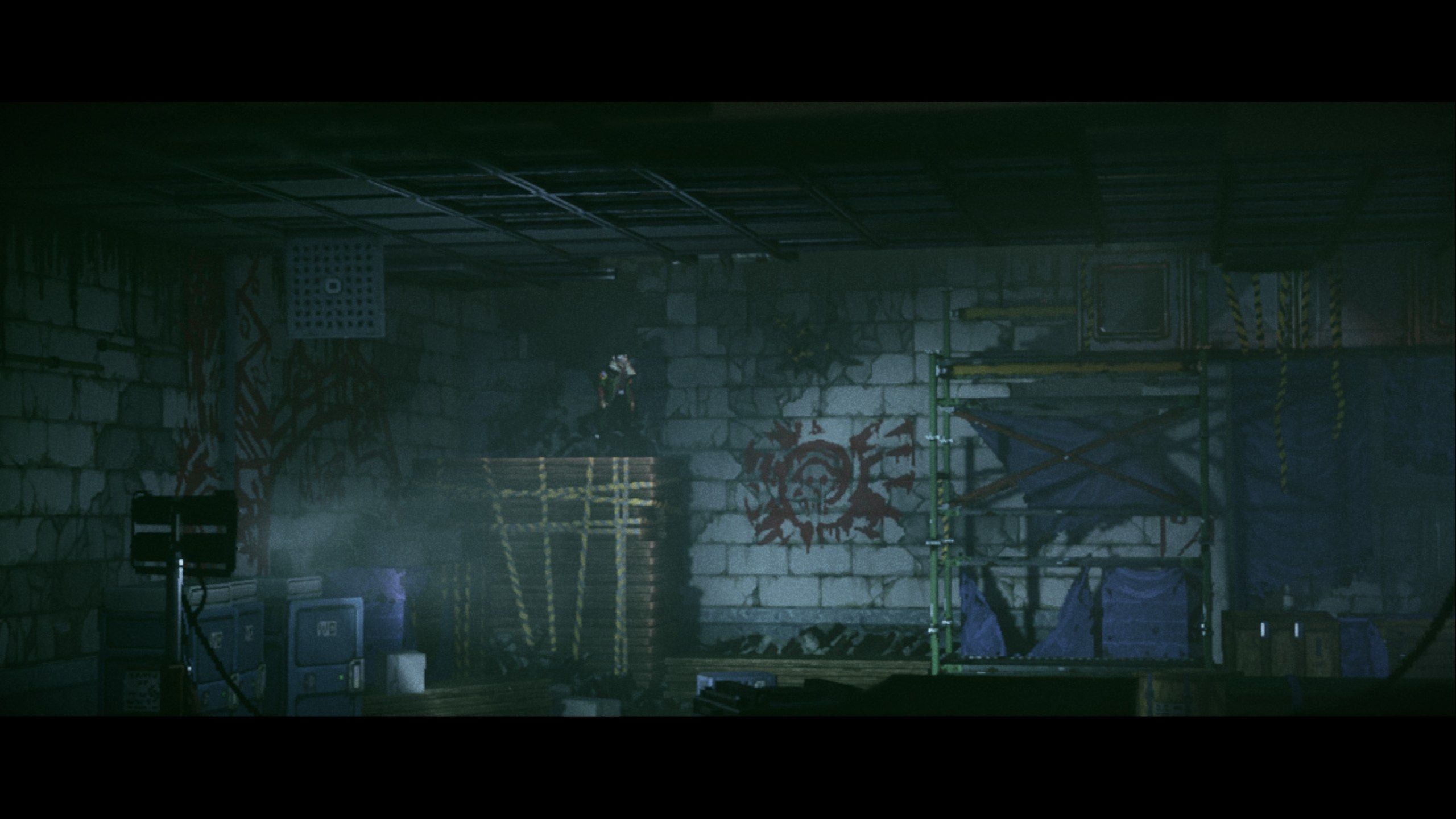
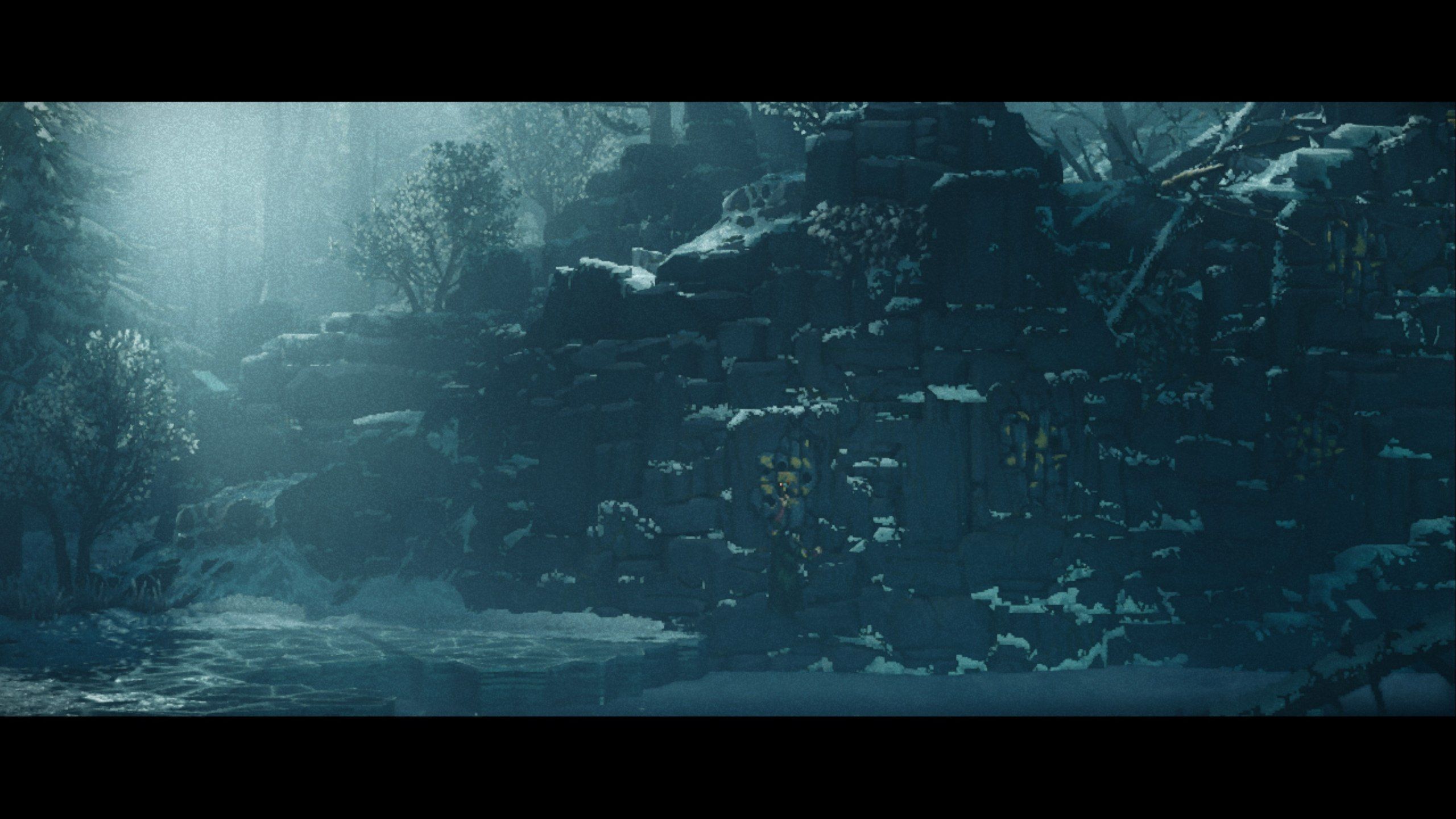
And again: the visuals interfere. The game does not communicate clearly when to do what. Here, too, I see the staging and poor level readability as the main issues. With the right reflexes, it should theoretically be possible to clear certain sequences on the first try. Unfortunately, REPLACED only excels at trial and error.
A parkour sequence with a drone in the final third is a prime example. Starting with a beautiful camera sweep that was a highlight of the game for me, we land in a chase that allows zero mistakes. Not one. One error—even if it's just because the stick wasn't already pointing right after a retry to start running immediately—and I had to hit "Start -> Restart Checkpoint." Swung on a pole one too many times and wasted a second? Reload checkpoint. Some other sequences even set the checkpoint before a cutscene.
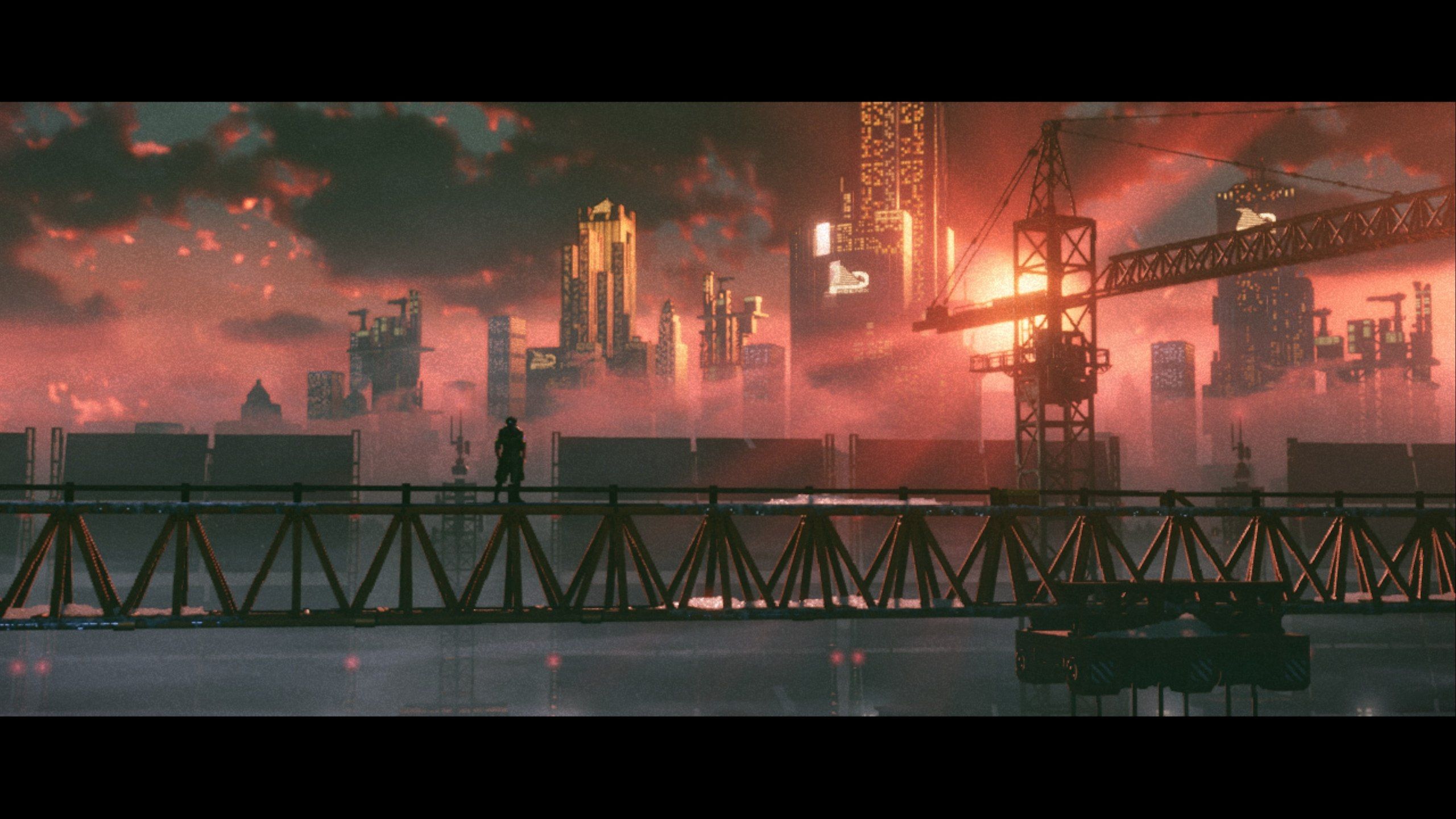
And I'm not talking about surprise elements like those found in 2D games like Limbo. The problem is the controls and poorly readable levels. This instantly ruins beautiful, cinematic moments.
Another example? Do you see where you need to hold on here? Even with the brightness turned up, I had major issues.
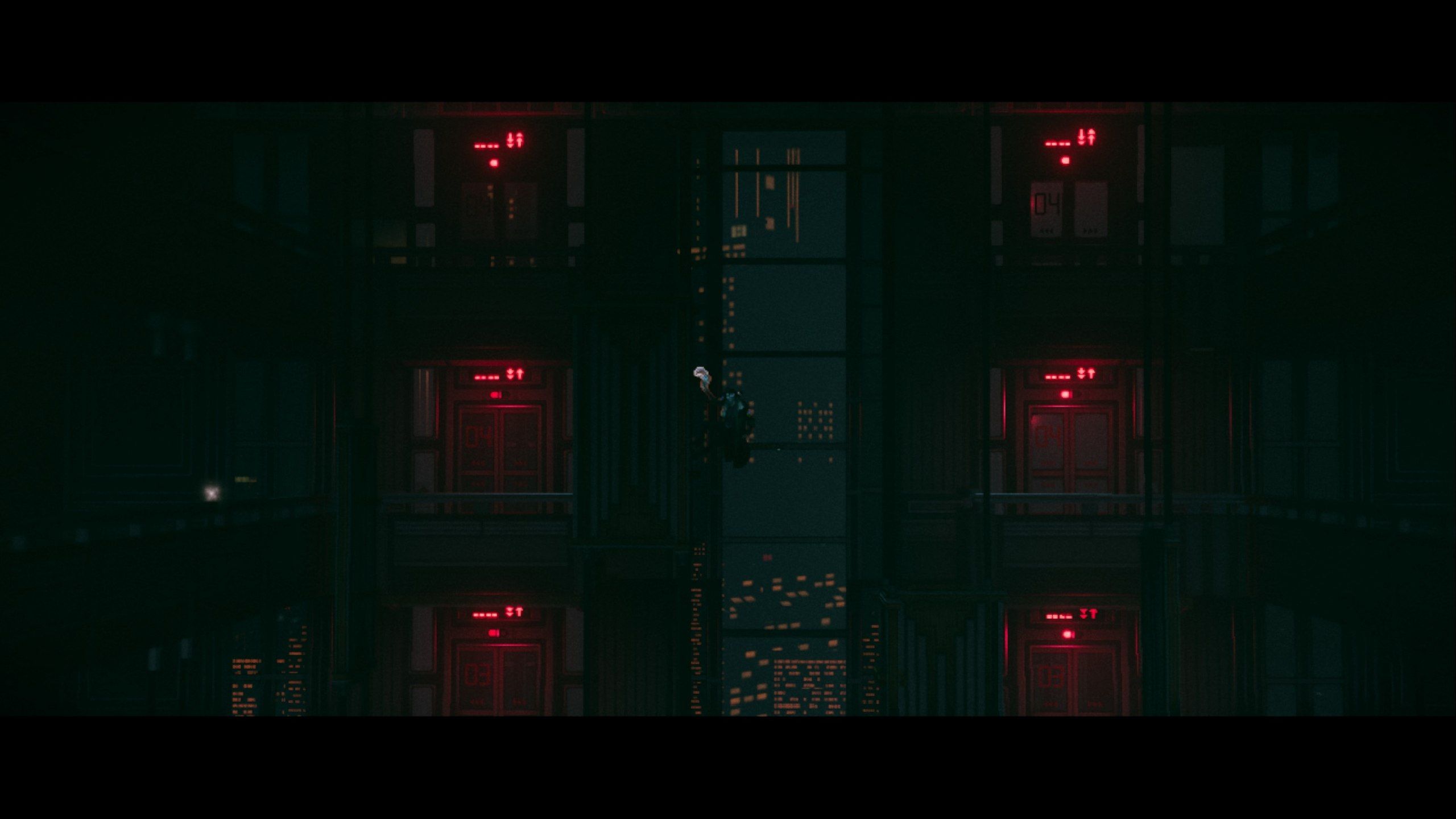
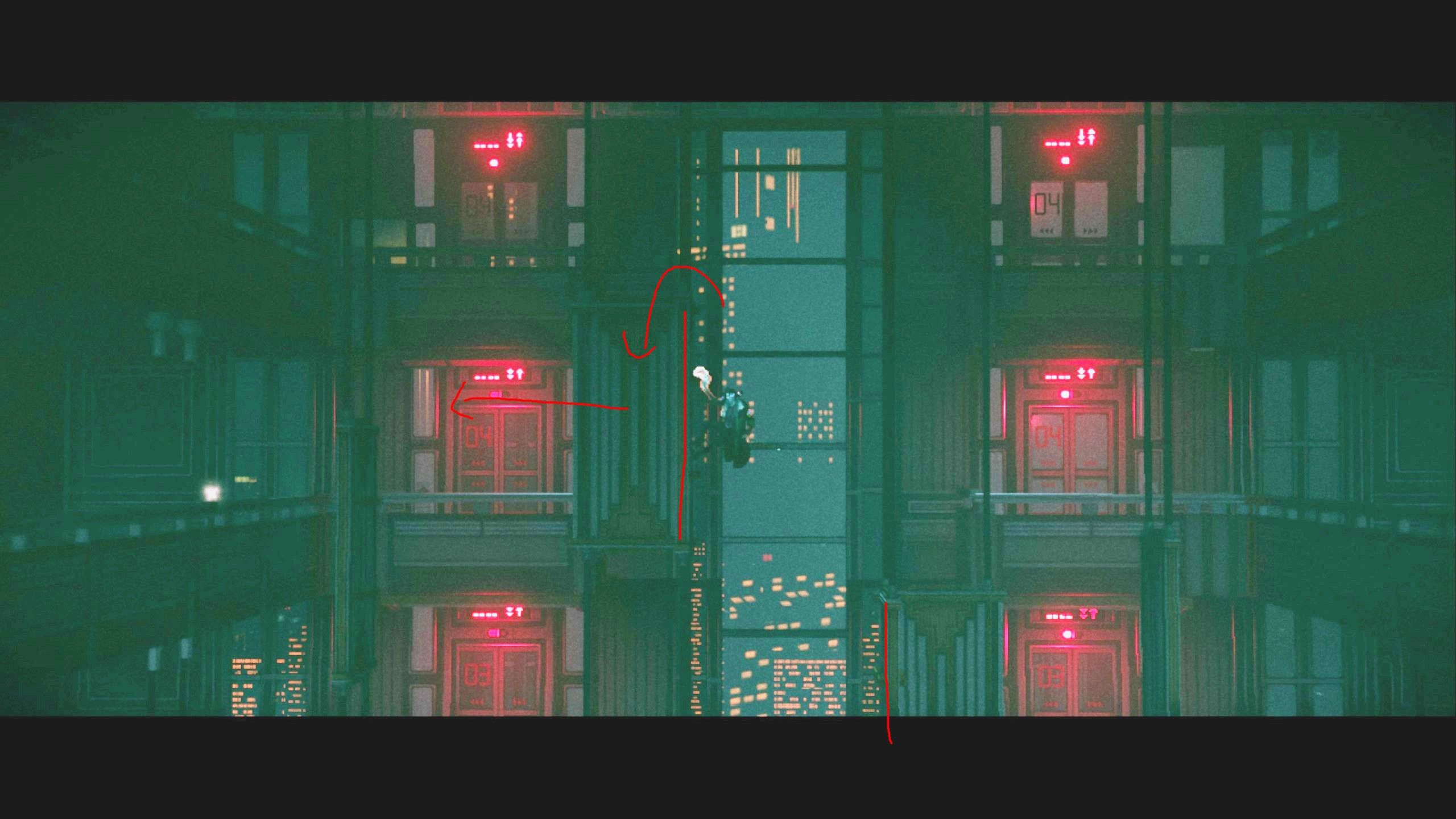
Not only are these squares hard to see, they aren't even solid blocks. Most of the element is just background, and you can move perfectly right in front of it. But you don't know that, you'll probably fall, and you can start the climbing section all over again. Thank you.
A combat system like a wet sponge
REPLACED features a free-flow combat system. Comparisons to the Batman Arkham series are fitting—but the implementation feels like the developers didn't understand what made the combat in their inspirations good.
One example: counters have a timing window so short that it's less a game of reaction and more a game of luck. In games like Batman or Mad Max, I didn't hit every counter either, but I can count the counters I actually pulled off in REPLACED on one hand. Since a successful block barely offers any advantages and the dodge-roll is generally the better choice, unblockable attacks becoming the standard is likely the result.
And then there's another problem: different enemy types require different strategies. Some need heavy hits, some counters; projectiles must be dodged or reflected. But usually, everything happens simultaneously. However, active animations cannot be cancelled; often, it just comes down to whether I or the enemy attacked first. And since there are only two dimensions, other enemies simply slide in front of the one you're actually targeting, causing the attack to likely fail. It is sluggish.
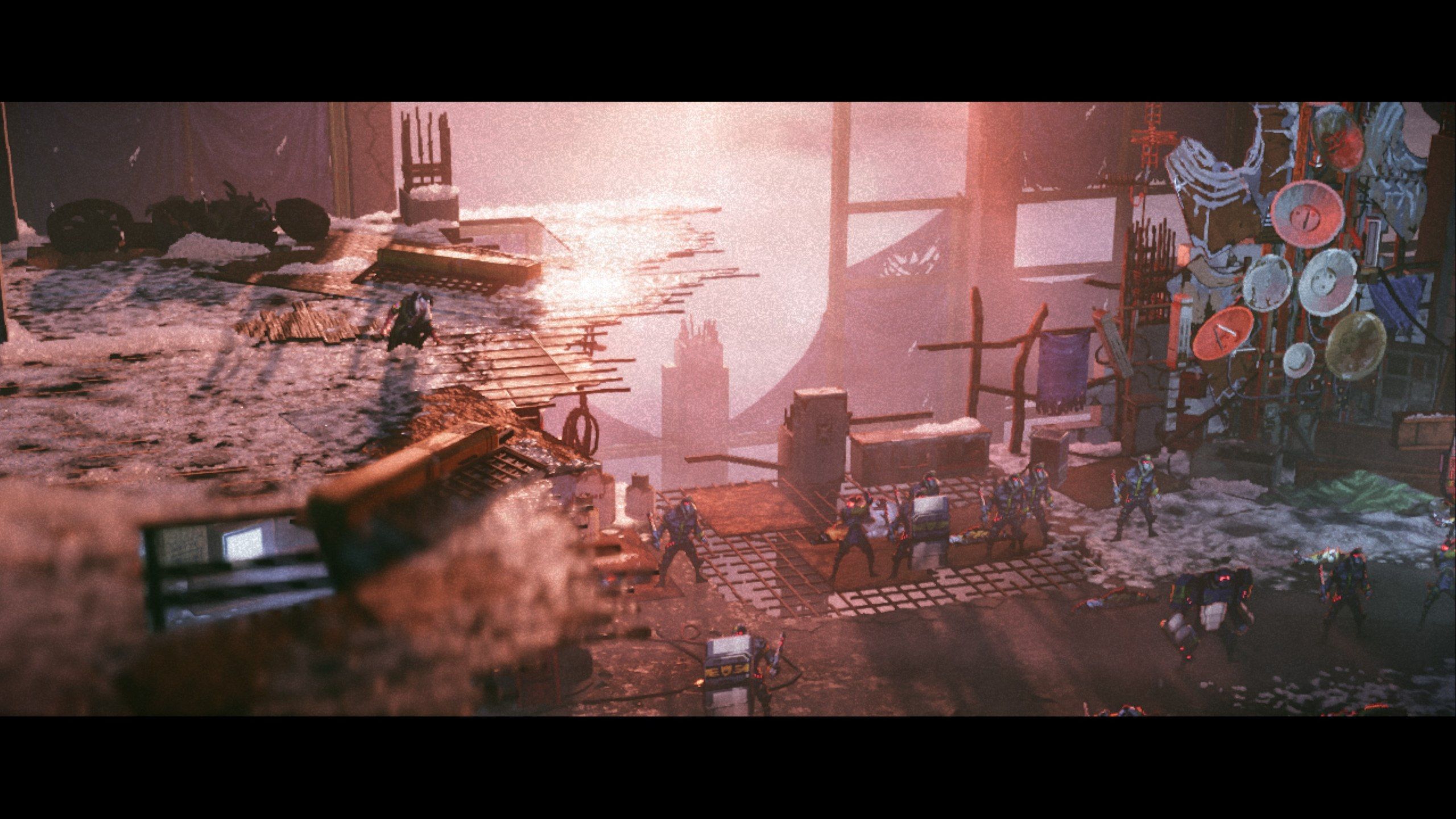
The UI doesn't help. In one section, the general level color is reddish; at these moments, the entire interface simply becomes unreadable. Health bars, attack icons, etc. This cannot be a design choice—there are other level segments with limited lighting that deliberately play with light and shadow—it's an oversight in production. Then there's the task of managing gadgets, abilities, and gauges in the late game, all assigned to buttons that seemed anything but logical to me. I only understood how an essential gameplay feature worked in the final stages of the game.
All these points ensure that the difficulty level quickly shifts from a walk in the park to "masochistically hard" as abilities and enemy types grow.
And in case you're wondering how often a combat sequence starts with the character falling through a ventilation shaft: it happens constantly in this game. You can almost assume that as soon as I'm in a vent, I'm about to crash into a room.
A game that stands in its own way
When I started REPLACED, I thought we were dealing with a game featuring great graphics and gameplay similar to Limbo, with occasional fights. That describes it well—but only until about Chapter 3.
Then the identity crisis begins. It starts with a clear direction—then you land in the station, a hub visited repeatedly to advance the story and provide small side quests. These side tasks consist of walking from A to B to C. "Exciting." For instance, the retro arcade mini-games: a decent idea, but they don't justify more or less forcing the player to complete them. Why? Besides exposition, they offer upgrades and rewards that, while optional, are actually essential to survive the game.
And for what? I suspect to stretch the playtime. Without the station, the playtime would feel a third shorter—which wouldn't have been a bad thing.
Another point: there are sections where R.E.A.C.H. can move on two depth planes. It’s cool at first but is barely utilized. The game doesn't even know how to properly use one depth plane; the second one usually just ensures I walk around the same scenery more just to occasionally find a scrap of lore.
Let's talk about the story
The story has strong beginnings and an interesting AI-protagonist dilemma—R.E.A.C.H. is a "fish out of water," a cold AI developing human emotions through suffering the more it lives in the world it operates in. Not particularly gripping, but solid. But the game never pauses long enough for you to engage with it. Documents revealing more about the game world are scattered everywhere. Basically the opposite of show, don't tell.
Because we are capable of using a pistol, we are somehow made into the "Chosen One." That's it. A generic gun taken from a guard can apparently topple the entire dystopian system.
And at some points, it feels like random story arcs were cut out without providing transitions. People are mentioned whom we never met, characters behave completely differently without explanation, things happen that are chronologically impossible, and there are poorly interpreted time skips.
The most beautiful game that plays poorly
REPLACED is a game that wanted to be more than it is. Eight years of development—and the result is a game that looks like a modern classic and feels like a prototype.
A game that you can play, but shouldn't necessarily.
Perhaps you can tell from the length of this article, which was originally planned as a short post: I wanted to love it. And in the end, I was a bit sad and angry. The cinematic moments are great. But the effect wears off. And then you see the rough edges, which are so sharp that you constantly cut yourself on them.
"Replaced is good, but it can't quite Reach true greatness."
Currently, I would recommend watching a highlights video on YouTube/Twitch rather than playing the game. Or wait and hope that the developer revisits it.